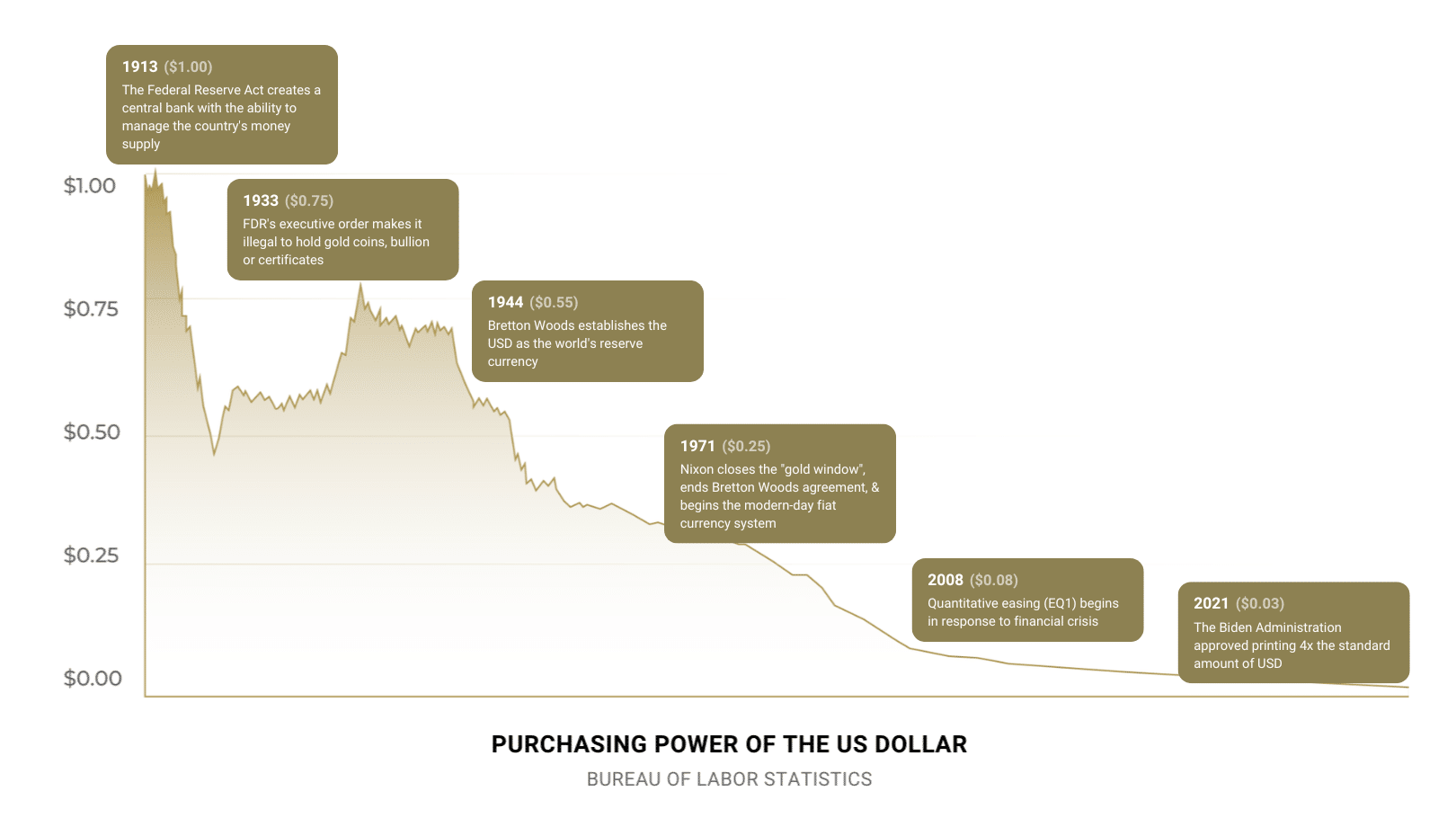
1913
($1.00)
The Federal Reserve Act creates a central bank with the ability to manage the country’s money supply
1933
($0.75)
FDR’s executive order makes it illegal to hold gold coins, bullion, or certificates
1944
($0.55)
Bretton Woods establishes the USD as the world’s reserve currency
1971
($0.25)
Nixon closes the “gold window”, ends Bretton Woods agreement, & begins the modern-day fiat currency system
2008
($0.08)
Quantitative easing (EQ1) begins in response to financial crisis
2021
($0.03
The Biden Administration approved printing 4x the standard amount of USD
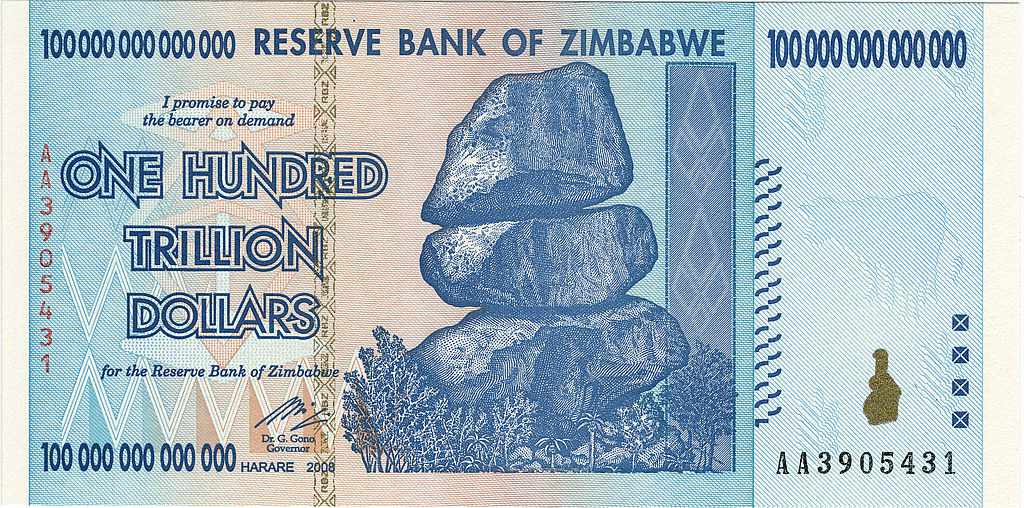
(2000 - 2009)
Exchange Rate: 10 billion to 1
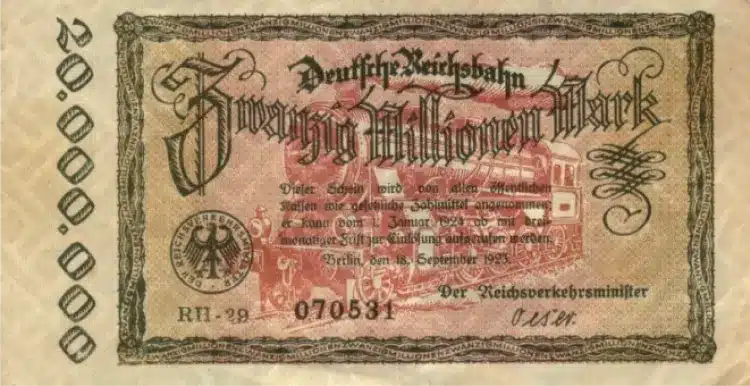
(1922 - 1923)
Exchange Rate: 10 trillion to 1
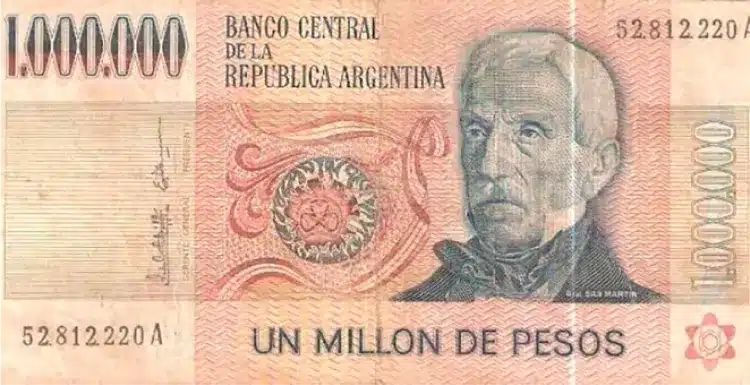
(1975 - 1992)
Exchange Rate: 100 billion to 1
As inflation reduces the dollar’s purchasing power, some investors include tangible assets in their long-term plans. Gold and silver have a limited supply and a long history of use in commerce and investment. Gold and silver are often held as a hedge against inflation.
Physical bullion allows you to own precious metal in the form of coins or bars. It also introduces exposure to another asset market, which contributes to a diversified portfolio, alongside savings and other investments. Buyers can approach precious metals at their own pace, making individual purchases to build their holdings gradually. Some prefer to focus on one metal, while others choose a combination of gold and silver. This flexibility allows you to shape your purchases around your interests and long-term plans.

Gold and silver share an investment appeal, but demand for each comes from a different mix of buyers and uses.
Gold has an established role in central bank reserves. Alongside demand from investors, jewelry buyers, and technology manufacturers, this gives gold a connection to both financial institutions and consumer markets.
Silver’s market combines investment demand with substantial industrial use. This connects silver more directly to manufacturing and technological applications, giving buyers another perspective to consider when exploring precious metals.
For a closer look, explore our Why Buy Gold and Why Buy Silver pages.
Gold has an established role in central bank reserves. Alongside demand from investors, jewelry buyers, and technology manufacturers, this gives gold a connection to both financial institutions and consumer markets.
Before purchasing, consider how you will safeguard your metals and how you would sell them when the time comes.
Purchase Precious Metals
with Dupré Coins
Whether you are making your first purchase or adding to existing holdings, our team can explain available products, metal content, and current pricing. Contact Dupré Coins & Precious Metals to discuss gold and silver coins and bars.